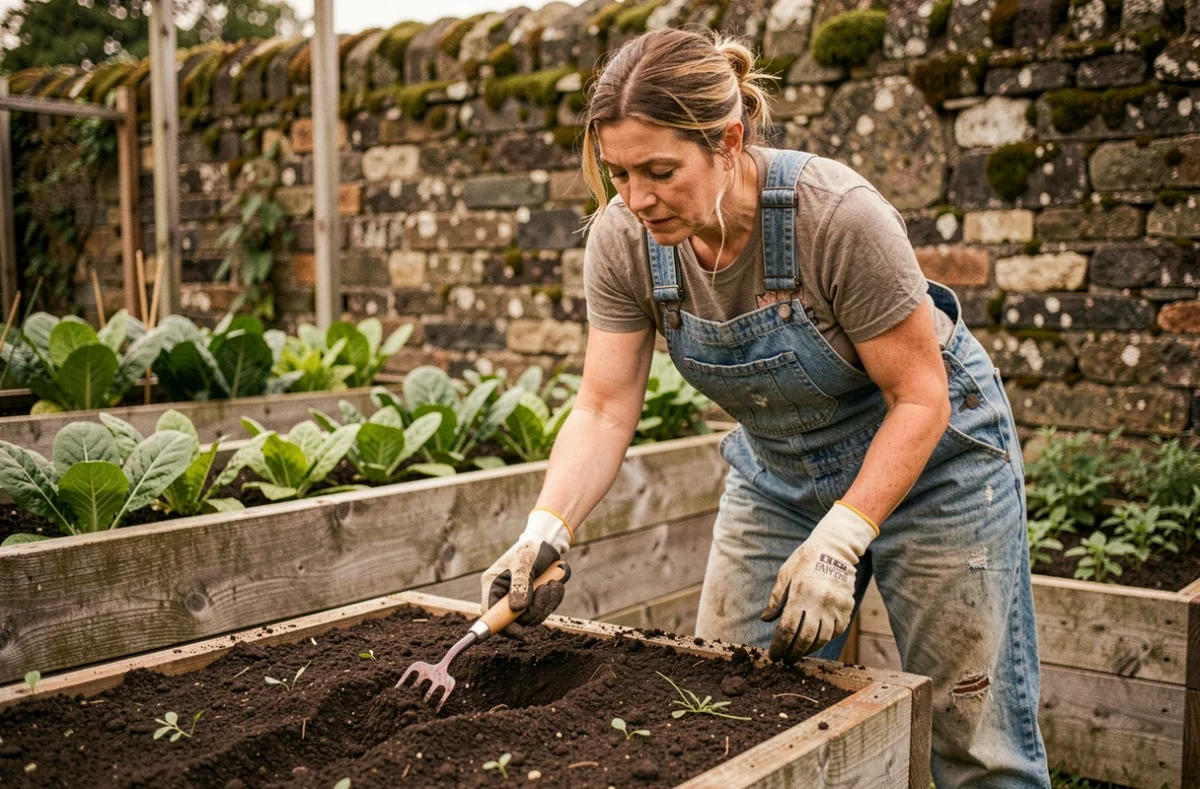
On a clay soil soaked by spring rains, plunging a spade into it is like cutting a compact block, bringing up the plow sole and exposing dead soil on the surface. With a grelinette, you push the tines in, tilt back, and the clod cracks without leaving its layer. It is this simple gesture that changes the trajectory of an organic vegetable garden over several seasons.
Clay Soil and Grelinette: The Right Timing to Avoid Wasting Effort
Most guides recommend using the grelinette “in spring or autumn.” This works on light soil. On heavy, clayey soil, this vague advice often leads to poor results: sticky clods, tines getting stuck, and considerable effort for superficial aeration.
The actual window for use depends on the soil’s moisture content. On clay soil, you intervene when the soil is dried out but not dry. Specifically, take a handful of soil at a depth of 15 cm: if it forms a ball that cracks when you press with your thumb, it’s the right time. If it sticks to your fingers like dough, wait a few days. If it crumbles into dust, you’ve missed the window.
This tactile test is worth more than any calendar. In practice, on clay soil, the right window often lasts only a few days in spring and a few days in autumn. Missing this window and forcing the passage creates compacted zones deep down that the grelinette will not be able to break up without a second pass.
Feedback on this point varies by region and microclimate, but the principle remains the same: you adapt the tool to the soil, not the other way around. Technical details on choosing the model (number of tines, working width) according to the type of soil are well documented on grelinette-warrior.com, which outlines the configurations suited to each situation.
Grelinette and Soil Microbial Life: What Agronomic Research Shows
It is often said that the grelinette “respects soil life.” This statement is true, but it deserves clarification with concrete data.
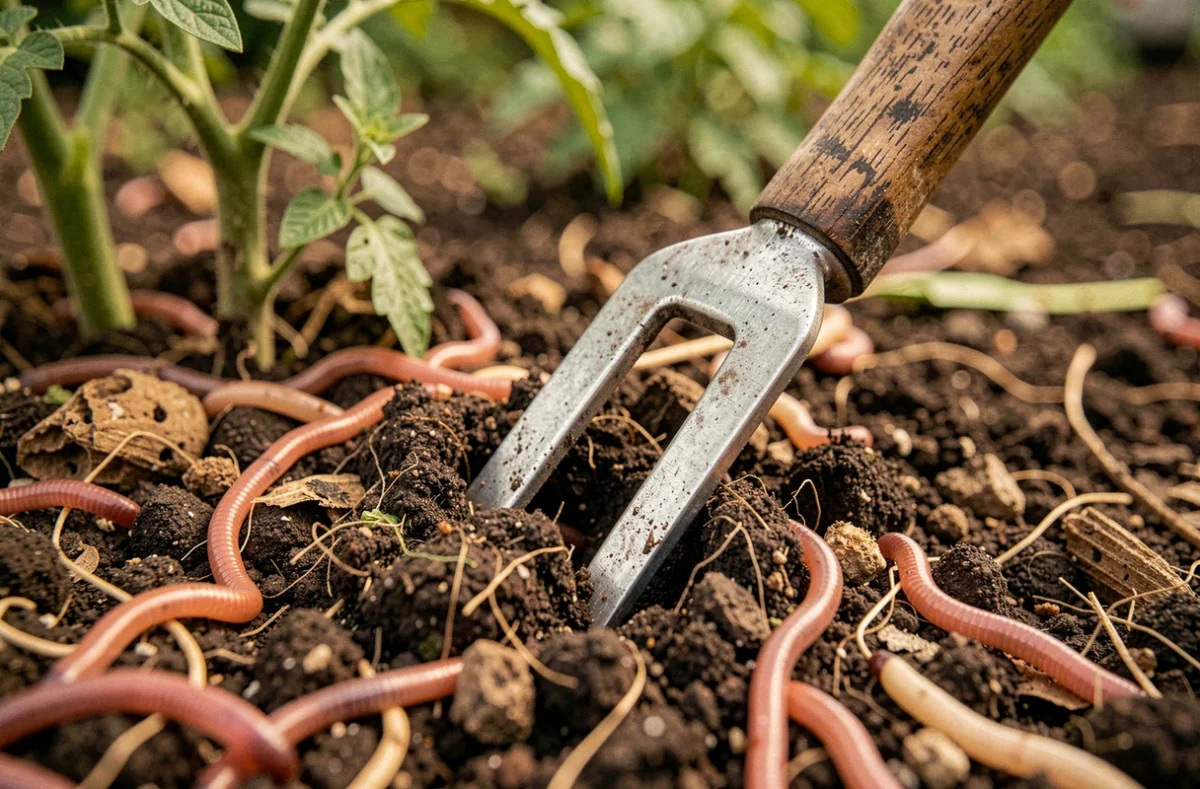
A study conducted by INRA in 2020 showed that after more than five years without plowing, the microbial biomass of the soil increases by about 30% compared to traditionally plowed plots. The grelinette is just one of the possible tools in a no-till system, but it is the most accessible for an amateur gardener.
This figure translates into something very concrete in the vegetable garden: a soil rich in microorganisms decomposes organic matter faster, releases more nitrogen that plants can absorb, and retains water better. An organic vegetable garden that combines grelinette, no-till, and surface organic matter additions does not just “preserve earthworms.” It initiates a measurable fertility cycle over the medium term.
Why Tilling Breaks This Cycle
When you turn the soil with a spade, you reverse the layers of the soil. The surface aerobic bacteria end up deep down without oxygen. Mycorrhizal fungi, whose network takes months to weave, are severed. The soil essentially starts from scratch with each spading.
The grelinette cracks without reversing the layers. The earthworm galleries remain intact, the fungal network continues to function, and surface decomposition feeds the lower layers through natural gravity.
Using Technique in the Organic Vegetable Garden: The Gestures That Make a Difference
You plant the tines vertically, step back, and pull the handles towards you using your body weight. The movement does not come from the arms but from the hips. This is the most underestimated technical point: many gardeners pull with their shoulders and tire themselves out in ten minutes.
- Working Depth: push the tines in their full length (about 20 cm). If the soil resists, do not force it; step back a few centimeters and try again.
- Pass Spacing: move back while advancing, each new pass slightly overlapping the previous one to avoid leaving any un-aerated strips.
- Frequency: in an established organic vegetable garden with permanent mulching, one pass per year is sufficient, usually at the end of winter when the soil is dried out.
- Supplement: after passing the grelinette, spread compost or mulch directly on the surface without incorporating it, to nourish the soil life from above.
Adapting the Number of Tines to the Width of the Beds
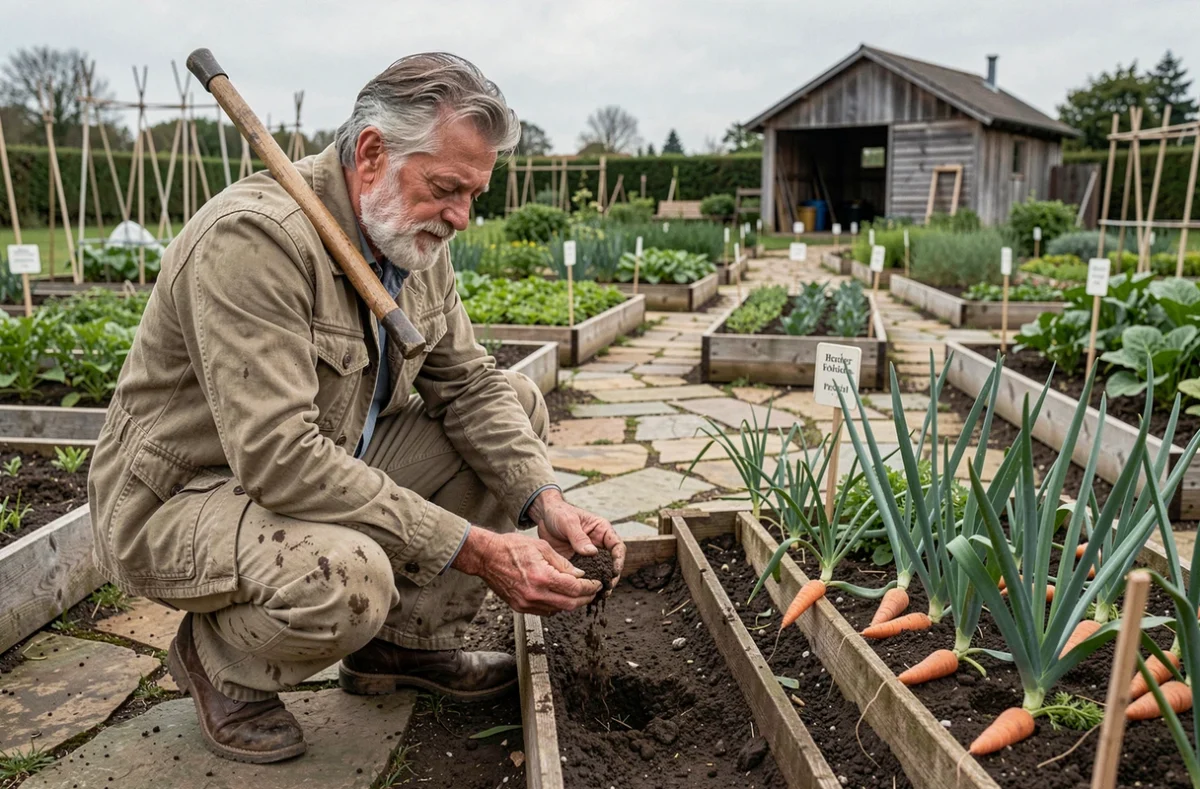
A grelinette with 5 tines covers about 50 cm in width. For cultivation beds of 80 cm, two parallel passes are sufficient with a slight overlap. On narrower beds or in constrained spaces (between borders, raised beds), a model with 3 or 4 tines offers more maneuverability.
The weight of the tool also matters. On heavy soil, a grelinette that is too light bounces instead of penetrating. Look for a model with tines made of hardened steel, thick enough not to bend when encountering a stone.
Crop Rotation and Grelinette: Preparing Each Bed Without Tilling
In an organic vegetable garden, crop rotation requires changing the assignment of each bed from one year to the next. The grelinette is used at each transition: after harvesting root vegetables, before planting legumes, between two series of summer crops.
The gesture remains the same, but the intensity varies. After potatoes, the soil is often already loosened deep down: a light pass is sufficient. After squash that have occupied the ground for months with thick mulching, the soil underneath is generally soft and teeming with life. You pass the grelinette to break any potential surface crust, not to work deep.
Adapting the effort to the actual needs of the soil prevents overexertion for both the gardener and the land. A living soil, properly mulched and nourished from above, requires less and less mechanical work over the years. The grelinette then becomes a tool for occasional maintenance rather than a heavy preparation tool.
A well-managed organic vegetable garden with this tool ultimately produces a virtuous circle: less soil work, more biological life, better structure, and vegetables that root in fertile soil without needing to be forced.