The interior decorating market in France offers plenty of choice, from mainstream retailers and local craftspeople to reuse networks structured by ADEME. For tenants, Article 7 of the law of 6 July 1989 distinguishes between changes they can make freely and alterations that require the landlord’s written consent.
This legal framework shapes what you can do: not all decorating changes are treated equally, and some come with an obligation to restore the property. Transforming an interior without major work or an excessive budget means understanding these limits before you get started.
Decorating a rental: what the law actually allows
Most decorating guides present their ideas as universally applicable. In practice, repainting a wall in a bold colour, putting up wallpaper or installing heavy shelves counts as an alteration under the 1989 law if the landlord has not given written consent.
Reversible changes, on the other hand, are allowed. Changing curtains, laying a rug, plugging in a light fitting or rearranging furniture requires no permission. Choosing items that are easy to remove reduces the risk of disputes at the end of the tenancy.
In practical terms, this points to three types of decorative items that are particularly well suited to rental properties:
- Removable textiles (cushions, throws, curtains on a tension rod that requires no drilling) that change the feel of a room without touching the walls.
- Floor or clip-on lamps that replace overhead lighting without any electrical work.
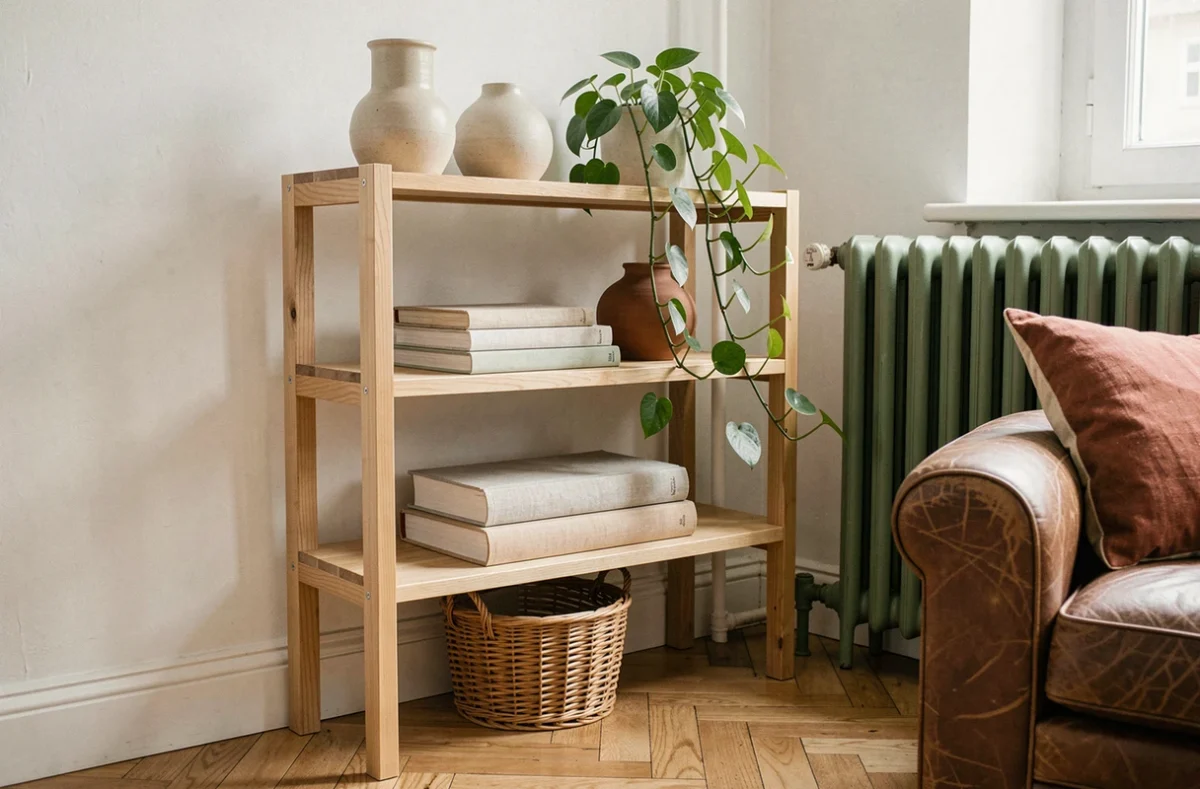
- Modular or stackable furniture that can be rearranged as needed and taken with you when you move out.
Before undertaking any more ambitious project (painting, wall fixings, altering a partition), writing to the landlord is the only reliable legal safeguard. Browse Créa Décor’s home decor to find pieces and accessories designed with these constraints in mind.
Colour and lighting: two affordable ways to transform a room
You don’t necessarily need new furniture to change how a space feels. Colour and lighting affect the sense of space, the warmth of a room and the mood it creates, often for just a few dozen euros.
Colour: work in zones rather than painting entire walls
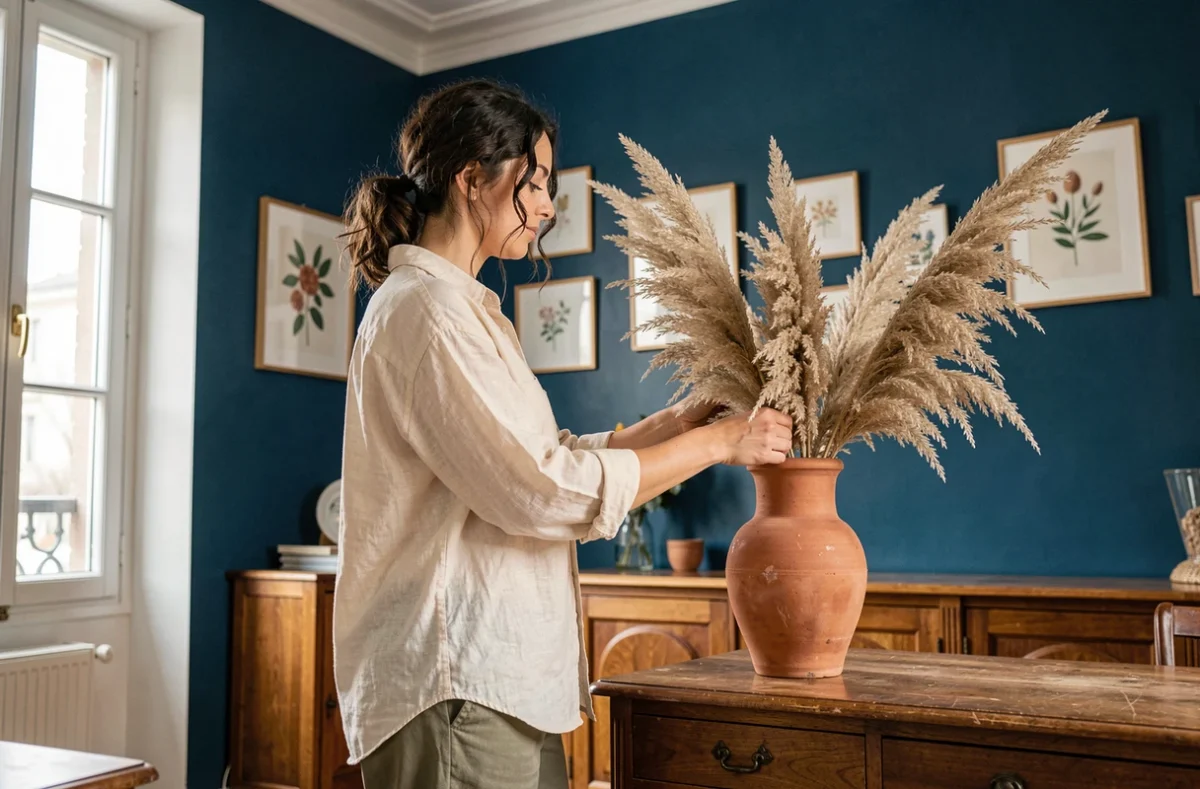
Painting a single section of wall behind a sofa or headboard creates a focal point without overwhelming the space. Muted shades (sage green, terracotta, blue-grey) tend to stand the test of time better than saturated colours, which can become tiresome more quickly. For tenants, large-format framed prints or a repositionable strip of wallpaper can replace paint without leaving a trace when removed.
A common mistake is using too many colours in the same room. Two main shades, plus an accent colour in the accessories, are enough to give an interior visual structure.
Lighting: layer your light sources instead of relying on a single ceiling light
A single ceiling light flattens the space and creates unwelcoming shadows. Interior designers use three layers: soft ambient lighting, task lamps at seating height and decorative light sources (fairy lights, candles, removable LED strips).
Three light sources in one room can transform its atmosphere more than a new piece of furniture. Table lamps and floor lamps only need an electrical outlet, making them suitable for any rental property.
Reuse and second-hand: an established network, not just flea markets
Second-hand shopping now goes well beyond Sunday flea markets. Through its observatory of extended producer responsibility schemes, ADEME tracks furniture reuse networks. From reuse centres to peer-to-peer donation platforms, furniture reuse also takes place through organised networks that provide a basic level of traceability.
For a cohesive interior, it’s better to buy less but choose with intention. A vintage armchair found at a reuse centre adds more character than five new accessories bought on impulse. The key is to define the look you want first (colour palette, dominant materials), then look for pieces that fit it.
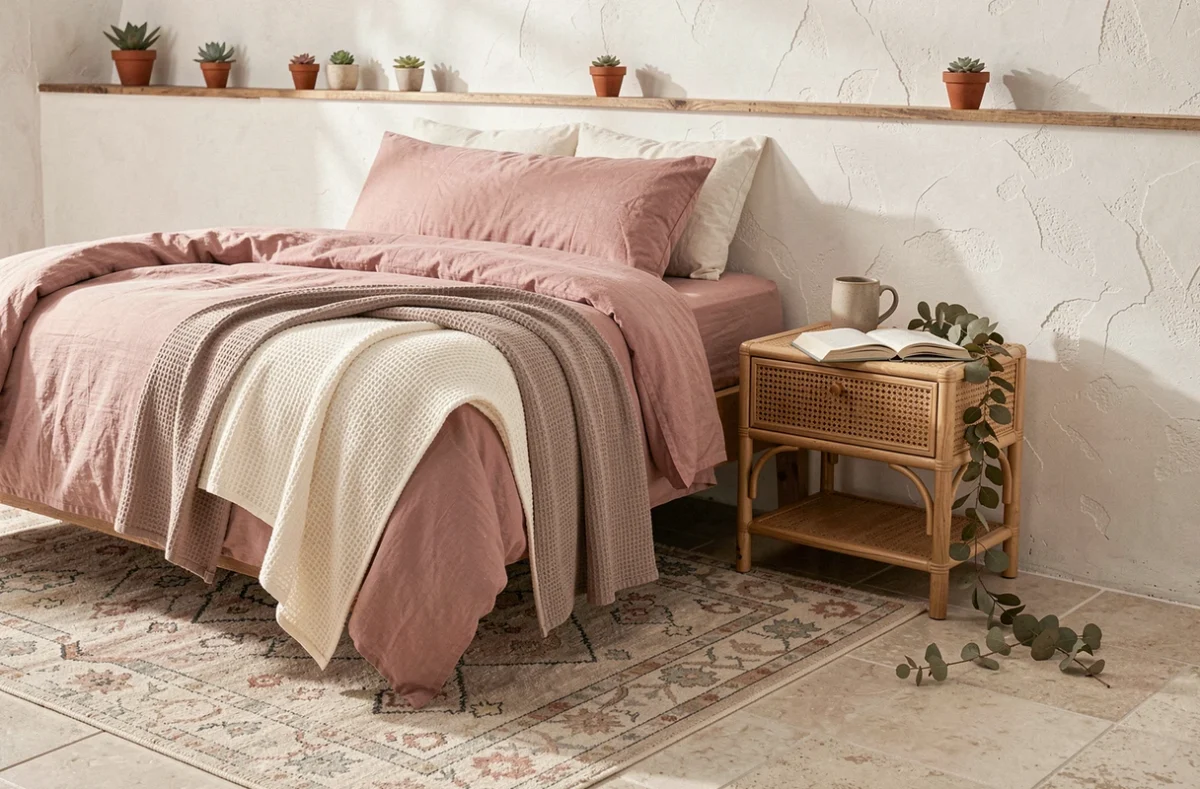
Raw or weathered wood, rattan, linen and ceramics work effortlessly together. These natural materials help bridge the stylistic differences between a new piece of furniture and a reclaimed find, making them easy to mix and match.
Decorative objects and layout: choices that can truly transform a room
Collecting decorative objects without an overall plan creates visual clutter, not personality. Successful interiors have one thing in common: every visible object has been chosen, not simply accumulated.
Grouping objects in threes or other odd numbers creates a more natural-looking arrangement than lining them up symmetrically. A stack of books, a vase and a candle grouped on a tray create a vignette. The same objects scattered across a shelf go unnoticed.
Furniture layout matters just as much as the furniture itself. Moving the sofa a few centimetres away from the wall, turning seats towards a focal point (fireplace, window, artwork) or clearing a walkway can change how spacious a room feels. These adjustments cost nothing and take an hour.
One final point that’s often overlooked: removing an object can sometimes improve a space more than adding one. Clear surfaces (sideboards, windowsills, countertops) give the eye room to rest and draw attention to the few pieces that remain.
Transforming an interior is less about budget than method. Understand the legal constraints of your home, choose reversible options such as lighting and textiles, favour established reuse networks and arrange things with intention rather than accumulating them: these four principles deliver visible results without major work or expense.