
Choosing elegant and comfortable shoes means balancing three factors: sole construction, material flexibility, and the level of formality required for the occasion. These criteria carry different weight depending on whether you’re getting ready for a day at the office, a wedding, or a weekend outing. Understanding how they interact helps you rule out the wrong options before you even try on a pair.
Technical comfort criteria compared by shoe type
Competitors go into great detail about dress codes but gloss over what actually makes one pair comfortable and another uncomfortable. The table below compares common styles against comfort features you can assess when buying.
| Style | Removable insole | Forefoot width | Material flexibility | Suitable occasions |
|---|---|---|---|---|
| Leather Oxford | Rarely | Narrow to standard | Stiff at first, softens over time | Ceremonies, formal interviews |
| Leather Derby | Sometimes | Standard to wide | Moderate | Office, semi-formal occasions |
| Loafer | Often | Standard | Flexible from the first wear | Office, casual outings |
| Chelsea boot | Varies | Standard | Moderately to highly flexible | Everyday wear, smart casual |
| Leather sneaker | Yes (most models) | Wide | Very flexible | Everyday wear, weekends |
Two columns deserve particular attention. A removable insole lets you add an orthotic or simply a thicker insole, which can make a dramatic difference to comfort over a full day. Forefoot width determines whether your toes have room to move or become cramped as the hours go by.
A soft leather loafer offers an appealing compromise: it’s easy to slip on, often accommodates a removable insole, and works just as well at the office as it does for dinner on a terrace. To explore styles with these features, grainedeshoes.com offers a catalogue you can filter by comfort features and occasion.
Full-grain leather, grained leather, synthetic materials: how the material affects everyday wear
Material is about more than appearance. It determines breathability, break-in time, and how long a pair will last.
Full-grain leather remains the benchmark for dress shoes. Its unsanded surface preserves the hide’s natural structure, making it more resistant to wear. The trade-off is that it takes several days of wear to mould to the shape of your foot.
Grained leather, with a mechanically textured surface, does a better job of hiding everyday scuffs. It’s a good choice for Derbies and loafers worn five days a week, where smooth leather would show marks sooner.
Synthetic materials have improved in quality, but they remain less breathable than leather. Over a full workday, the difference becomes noticeable: more moisture is trapped, increasing the risk of discomfort. For extended daily wear, even entry-level leather offers better thermal comfort than high-end synthetic materials.
Care and lifespan by material
Regularly polished full-grain leather can last for several years. Grained leather needs less attention but develops less patina over time. Synthetic materials cannot be polished or conditioned, and their lifespan depends mainly on the durability of the sole.
One point that’s rarely mentioned: the European Ecodesign for Sustainable Products Regulation (ESPR), in force since July 2024, provides for durability, repairability, and recycling requirements to be set for specific product categories. Requirements for footwear have not yet been defined, but the regulatory trend is encouraging manufacturers to design repairable shoes, including models with soles that can be reglued or replaced.
Office, formal, and everyday shoes: a quick decision guide
Rather than listing dozens of styles, three questions are enough to guide your choice based on the occasion.
- Is the dress code explicit or implied? A job interview in finance calls for a black Oxford. A start-up office is fine with a clean leather sneaker. Knowing the workplace norm helps you avoid costly mistakes.
- How many hours will you wear the shoes without a break? If you’ll be on your feet for more than six hours, a removable insole and soft leather should take priority over pure aesthetics.
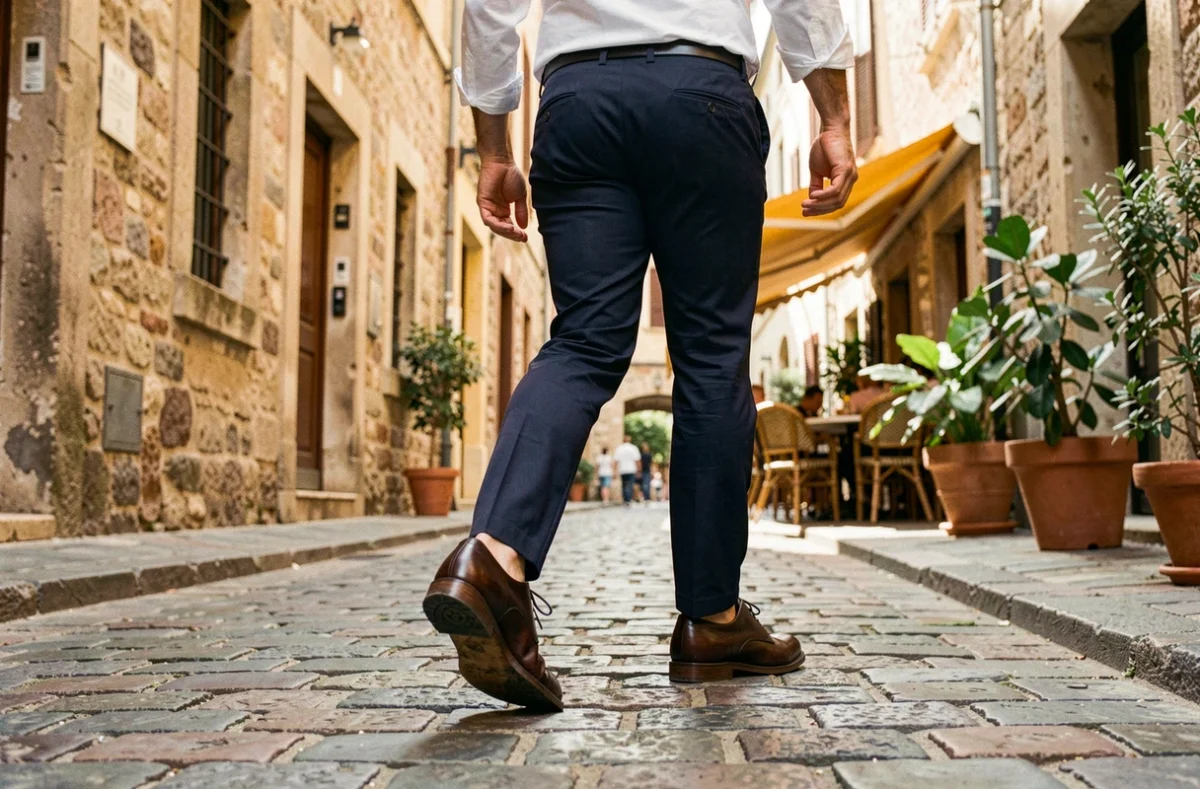
- Will you be wearing them outdoors on uneven ground? A smooth leather sole can be slippery on wet cobblestones. For an outdoor wedding or everyday urban wear, a rubber sole with some tread offers much better grip.
The trap of relying on one pair for every occasion
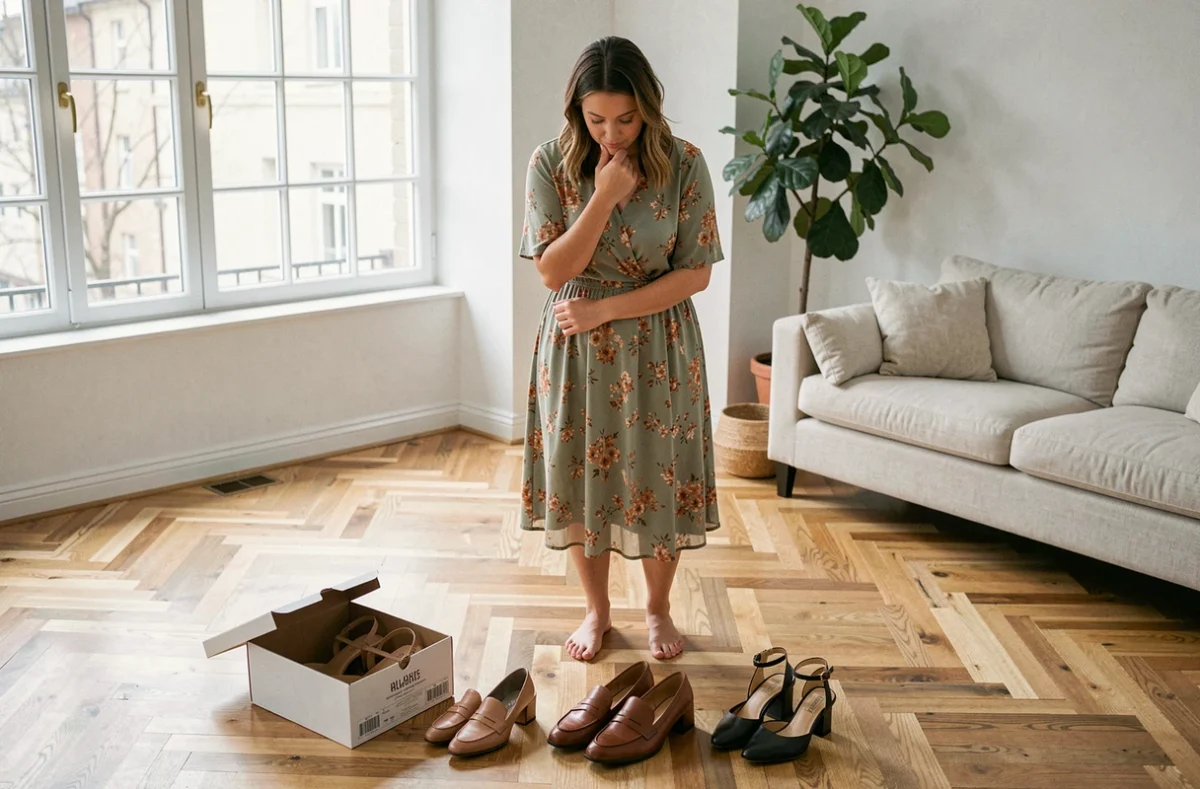
No single shoe is perfect for every social situation. A black loafer in soft leather comes close, but it’s still too casual for a formal wedding and too dressy for an urban hike. Three well-chosen pairs cover almost every need: one dress pair (Oxford or Derby), a versatile loafer, and a leather sneaker for the weekend.
Investing in quality leather and sole construction for each of these three pairs often costs less over five years than regularly replacing entry-level styles. Material durability and the option to resole a shoe have a greater impact on its true cost than the price tag.
European regulations and the future of choosing sustainable shoes
The European regulatory framework is gradually changing the range of products available. The ban on destroying unsold shoes already applies to large companies and will extend to medium-sized companies from 2030. This measure is encouraging brands to adjust production volumes and develop second-life channels.
A dedicated study on footwear has been announced separately from the European textile plan, whose ecodesign requirements are expected around 2027. Footwear and textiles will follow separate regulatory timelines, meaning that ecodesign criteria for clothing will not automatically apply to shoes.
For consumers, the practical impact will be easier access to information about the repairability and composition of different styles. Choosing a quality leather pair that can be resoled is no longer just a money-saving habit; it’s a choice that aligns with the direction of regulation.