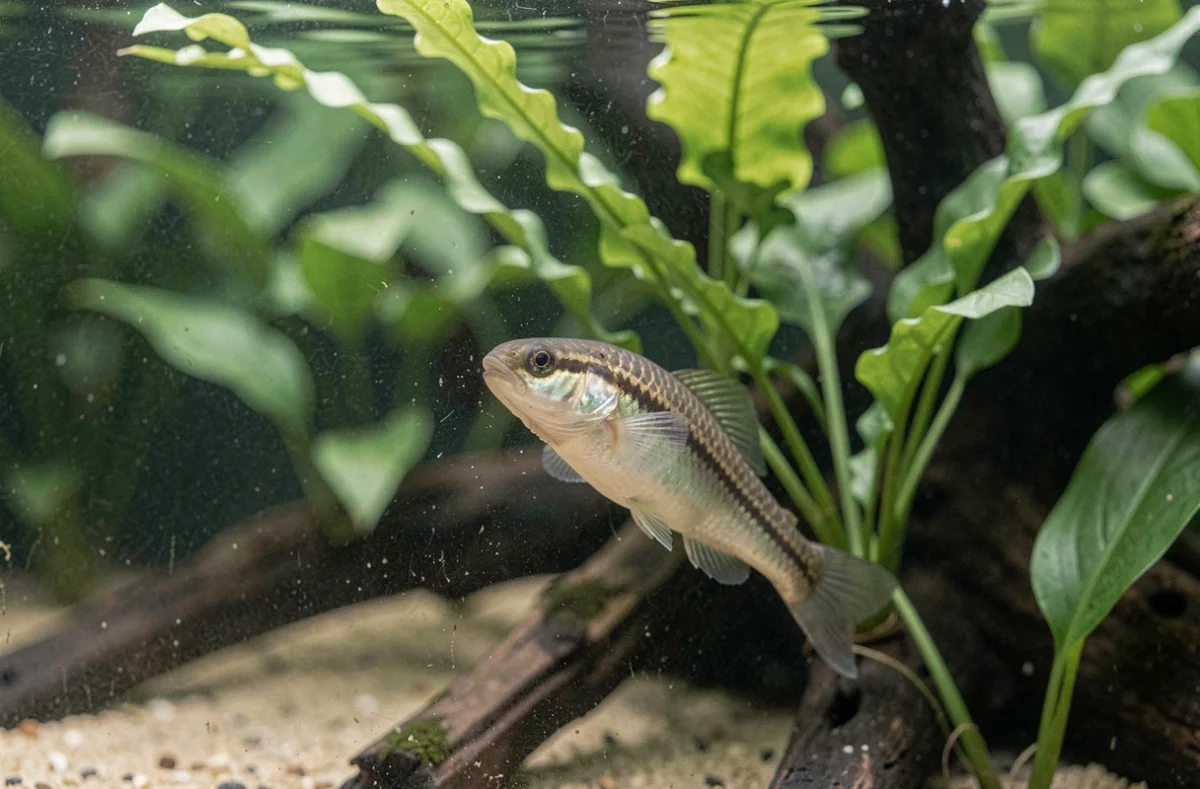
A three-month-old planted aquarium, slightly green glass, a group of six small fish ordered online: three weeks later, only two remain. This scenario comes up on almost every forum dedicated to Otocinclus. The problem rarely lies with the tank itself, but much earlier—with the purchase and the assessment of the environment being offered to them.
Otocinclus affinis at the pet store: what the label doesn’t tell you
The name Otocinclus affinis appears on most sales tanks, but it doesn’t guarantee the fish’s true identity. Species in this genus look very similar, and fish sold as O. affinis often belong to other species. In practice, it’s best to focus on the needs of the Otocinclus genus rather than relying on the trade name alone.
This confusion has a direct consequence: the water parameter ranges published in care sheets vary from one source to another because they combine data from several species grouped under the same name. Before buying, it’s worth taking the time to learn about Otocinclus affinis in a detailed care guide, then comparing it with what the store actually offers.
Most Otocinclus sold in France are wild-caught. They often arrive underweight and weakened by transport. Checking the fish’s belly at the store is the first useful step: a sunken belly is a sign that a fish is already weakened and will struggle to recover, even in a well-prepared tank. Look for active fish with slightly rounded bellies that graze on surfaces.
Biofilm and soft algae: assess your tank before buying
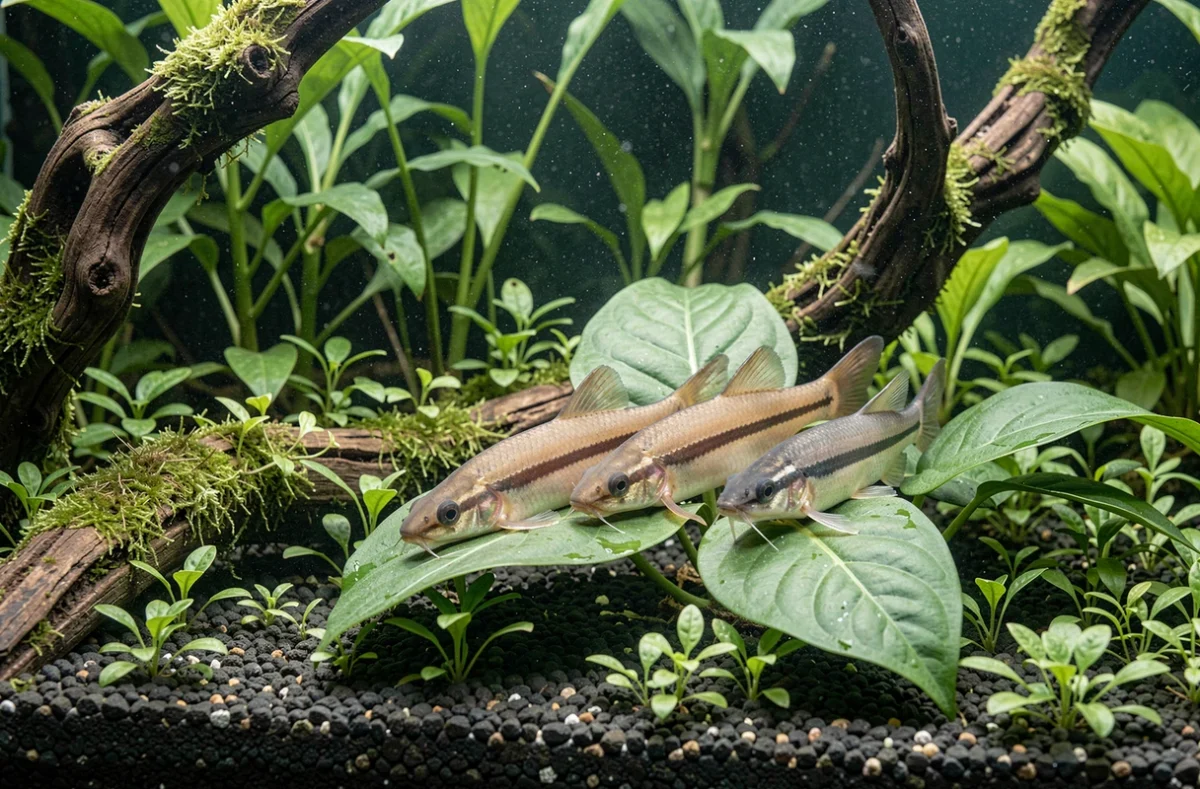
People often buy Otocinclus to deal with an algae problem. It’s an appealing idea, but it gets things backwards. These fish graze on biofilm and soft algae (diatoms and emerging green film) that naturally grow on glass, rocks, and plant leaves. A newly set-up aquarium that is still cycling doesn’t provide enough of this food source.
Conversely, an overly “clean” tank with no visible growth poses the same problem. A spotless aquarium can starve an Otocinclus within a few weeks.
Signs your tank is ready for Otocinclus
- A greenish or light brown film on the glass and décor that regularly reappears between cleanings: this is the biofilm they feed on
- Plants that have been established for several weeks, with broad leaves (Anubias, Echinodorus, Cryptocoryne) that provide grazing surfaces
- An aquarium that has been running for at least two months, with a stable nitrogen cycle confirmed by regular testing
If your tank shows none of these signs, it’s best to postpone the purchase. Introducing Otocinclus into a sterile environment means putting them on a starvation diet from day one.
Supplementary food for Otocinclus in an aquarium
Even in a mature tank, biofilm alone isn’t always enough, especially when keeping a group of five or six. Have supplementary food ready from the first week to prevent losses that can go unnoticed.
Blanched zucchini slices work well (boil for thirty seconds, then cool). Secure them to the bottom with a stainless-steel skewer or a plant fork, and remove any uneaten pieces after twelve hours to avoid polluting the water.
Spirulina-based sinking wafers are another option. Add them in the evening, when Otocinclus are more active. A common mistake is to feed them only surface flakes: these fish don’t swim to the top of the tank to look for food.
How to spot a feeding problem
An Otocinclus that stays motionless on the glass without grazing, or spends all day hiding behind the filter, may be stressed or lacking food. A gradually thinning belly is the most reliable sign. Respond by offering supplementary food more often and checking that faster tank mates aren’t monopolizing the food on the bottom.
Tank mates and water parameters for a group of Otocinclus
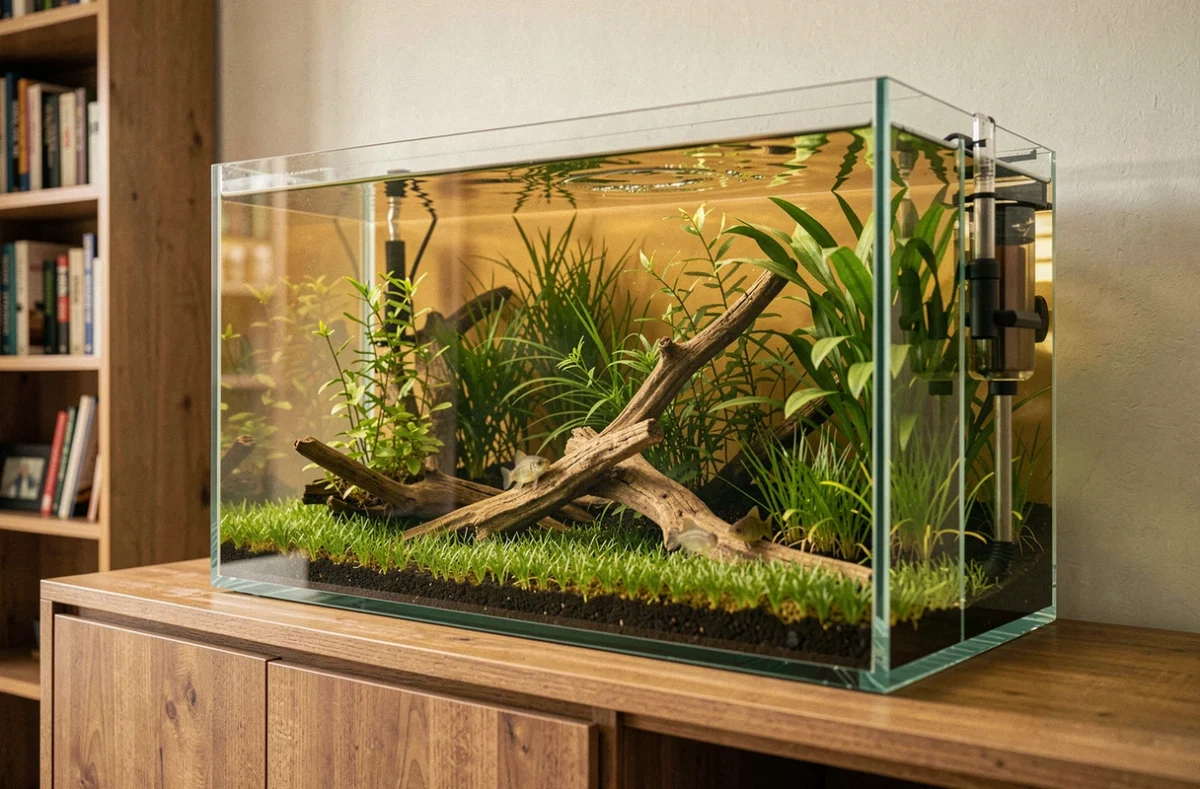
Otocinclus are social fish. A group of at least five reduces their stress and encourages them to come out more often. Kept alone or in pairs, they tend to hide constantly and slowly decline.
As for tank mates, their peaceful temperament makes them compatible with most small tropical freshwater fish, including Corydoras, Rasboras, Tetras, and Neocaridina shrimp. Avoid territorial cichlids and large bottom feeders that might compete with them for grazing surfaces.
Water parameters: aim for a broad range
Since the identity of the species sold is often uncertain, care sheets give varying ranges. Aim for soft to moderately soft water, slightly acidic to neutral, with a stable temperature of around 24 to 26 °C. More important than the exact values is keeping the parameters stable over time. Otocinclus don’t tolerate sudden changes in pH or temperature well.
- Regular weekly water changes in small amounts rather than one large monthly change
- Gentle filtration without a strong current: these fish prefer a moderate flow
- Don’t use chemical algae treatments in a tank with Otocinclus, as they can eliminate the fish’s main food source
Drip acclimation is still the safest way to introduce them. Let the bag float for about twenty minutes to equalize the temperature, then transfer the fish to a container and slowly add tank water using airline tubing. This takes time, but greatly reduces osmotic shock in fish already weakened by transport.
Ultimately, welcoming Otocinclus means preparing for their arrival well in advance: a mature tank, a supplier who pays attention to the fish’s condition, and supplementary food ready for the first evening. It’s this preparation—not the acclimation technique itself—that determines whether the group settles in for the long term or disappears within a few weeks.