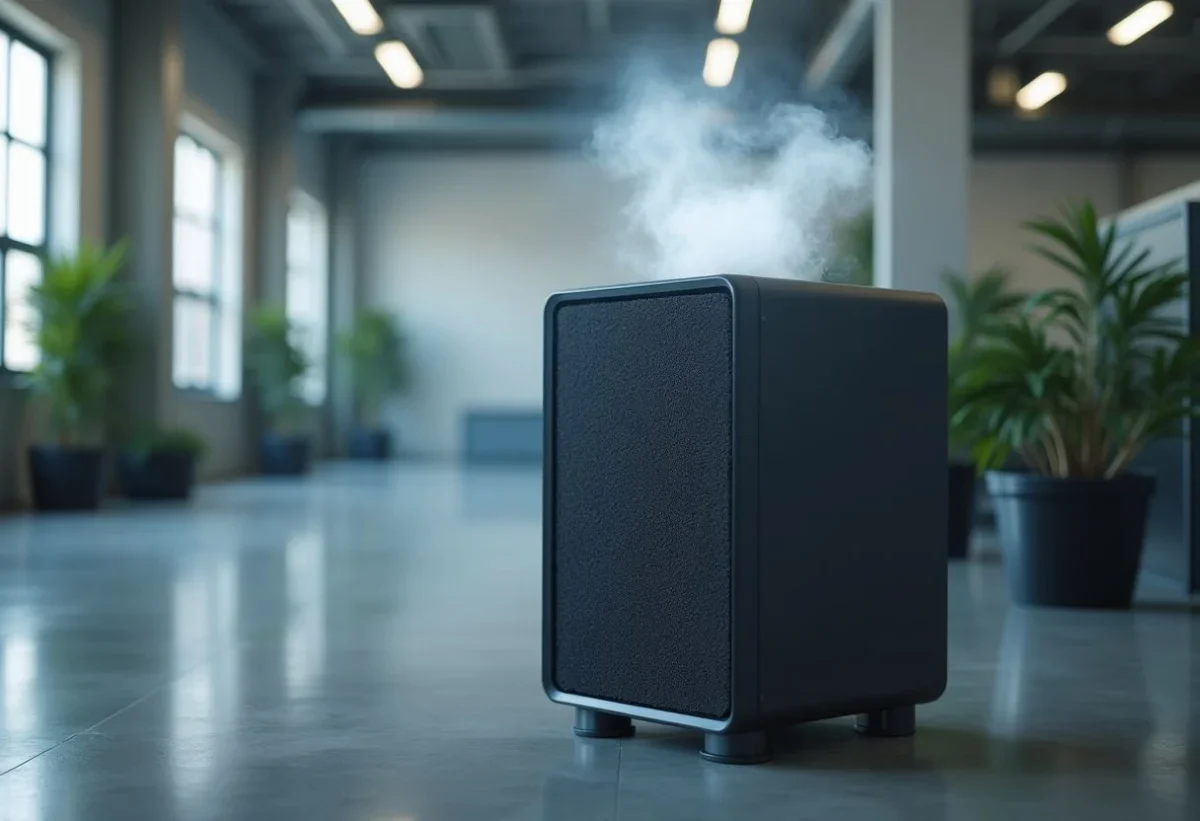
In a world where air quality is becoming a major concern, both in private and professional spaces, optimizing air purification has become essential. This is where the activated carbon unit comes into play, an innovative and effective solution for eliminating unwanted pollutants from our daily environment. Often unknown to the general public, this device plays a vital role in preserving our health and reducing unpleasant odors. Whether you are a professional looking to improve the air in your workspace or an individual wanting to ensure clean air at home, understanding how these systems work and their benefits can transform your approach to air quality.
What is an activated carbon unit?
The activated carbon unit is a device designed to purify the air by capturing unwanted and harmful molecules thanks to its adsorptive properties. This system uses activated carbon to filter the air efficiently and sustainably.
- Structure and operation: The unit generally consists of panels or cartridges filled with activated carbon. As air passes through these panels, contaminant molecules adhere to the surface of the carbon, thus purifying the air.
- Varied applications: Used in kitchen hoods, industrial ventilation systems, and even in home air purifiers, the activated carbon unit adapts to various environments to provide optimal air quality.
- Effectiveness: Recognized for its ability to eliminate odors, gases, and volatile organic compounds, it is particularly valued in the food and chemical industries where emission control is crucial.
The benefits of activated carbon
Activated carbon is at the heart of the success of these devices, offering several undeniable advantages.
- Large Adsorption Surface: Activated carbon has a porous structure that increases its adsorption surface, allowing for optimal capture of pollutants.
- Durability: Unlike other filters, activated carbon has a long lifespan, requiring few replacements and thus ensuring easy maintenance.
- Safety and Environment: Being non-toxic and environmentally friendly, activated carbon is a safe solution for air purification.
How to integrate an activated carbon unit into your space?
Integrating an activated carbon unit into your space is not a daunting task, but it requires some planning and a good understanding of your specific needs.
First, assess the available space to install the device. Consider the volume of air to be treated and the nature of the pollutants present.
Next, consult a specialist to choose the model suited to your needs. Some models are designed for heavy use, while others are better suited for smaller spaces.
Finally, ensure regular maintenance to maintain the system’s effectiveness. Activated carbon filters do not require frequent maintenance, but it is essential to follow the manufacturer’s recommendations to ensure optimal operation.
The limitations of the activated carbon system
Although the activated carbon unit offers many advantages, it also has certain limitations that are good to know.
Activated carbon is excellent for adsorbing a wide range of compounds, but it is not effective against fine particles and certain very specific gases. In environments where these pollutants are predominant, it may be necessary to combine the unit with other filtration technologies.
Moreover, although durable, activated carbon eventually becomes saturated and requires periodic replacement to maintain its effectiveness. Knowing the estimated lifespan of your filter and planning its replacement is essential to avoid a drop in performance.
Finally, in high humidity conditions, activated carbon may lose its effectiveness, and it is advisable to ensure that the ventilation system protects it from excessive moisture.