
We take a leftover roast out of the refrigerator, microwave it for two minutes, and the result resembles shoe leather. The problem doesn’t lie with the meat: it comes from the speed at which heat is applied. Reheating already cooked meat without drying it out relies on a simple principle that requires a bit of patience: slowly increasing the temperature to keep the juices inside the fibers.
Internal Temperature and Reheating Meat: The Overcooking Trap
When cooking a rare piece of beef, its internal temperature hovers around 55 to 60 °C. Reheating this same piece in an oven at 200 °C or in the microwave at full power pushes the temperature well beyond that in just a few minutes. The proteins contract, expelling water, and the meat becomes dry and stringy.
The solution is well-known in professional kitchens: aim for a reheating temperature close to the initial serving temperature. For beef, we target a return to between 55 and 60 °C at the core. For poultry, we go a bit higher, between 65 and 70 °C, for food safety reasons.
This is where a cooking probe changes the game. Connected models (like Meater or ThermoWorks Signals) send an alert to your smartphone as soon as the target is reached. There’s no need to monitor or guess anymore. If we explore how to reheat already cooked meat on Double Portion, we find this logic of temperature control as a guiding thread.
Low-Temperature Oven for Reheating a Roast or Chicken
The oven remains the most reliable method for reheating thick cuts (beef roast, chicken thigh, pork loin). Set it low, and be patient.
Concrete Setup
- Take the meat out of the refrigerator about twenty minutes beforehand, so it isn’t cold in the center. The thermal shock between a cold core and external heat increases surface drying.
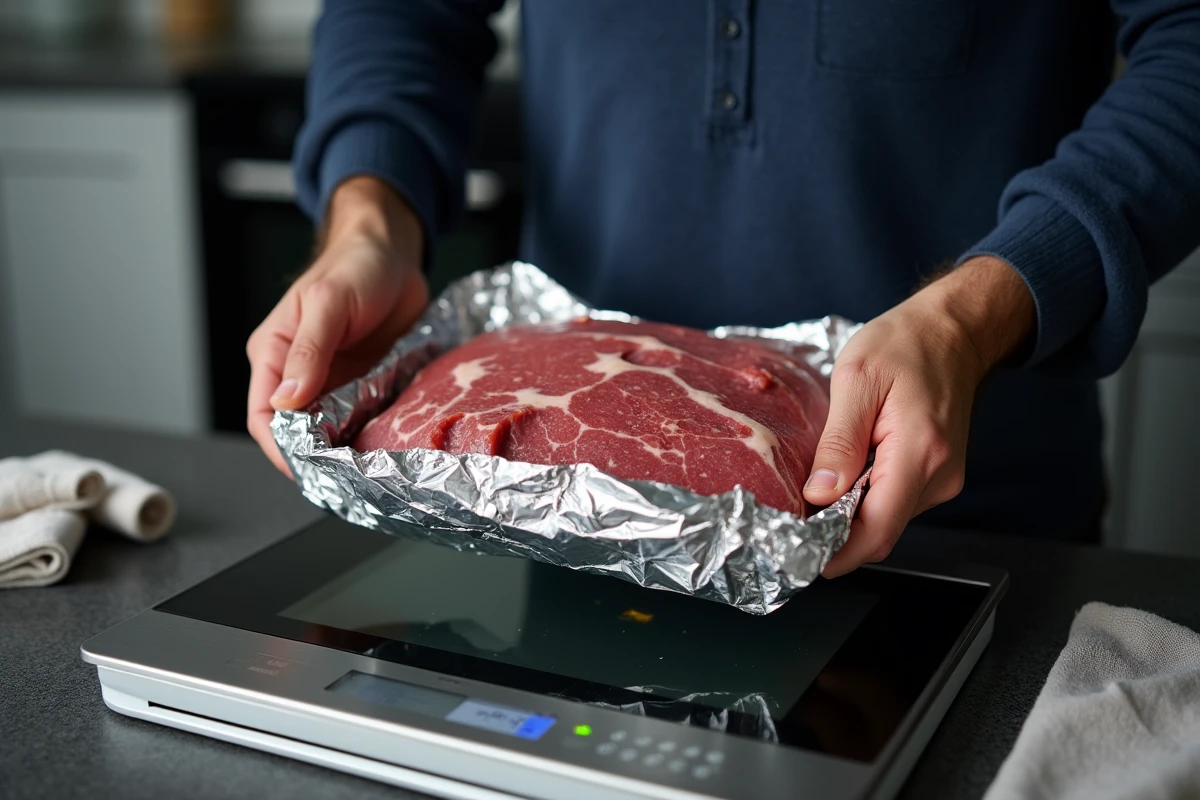
- Preheat the oven to the lowest possible temperature (generally, the thermostat goes down to 80-100 °C in a home oven). Place the meat in a dish, add a bit of broth, cooking juices, or simply water, then cover the dish with aluminum foil to trap the steam.
- Put it in the oven and let it gradually come back to temperature. Expect a longer duration than in the microwave, but the result is incomparable. The meat remains tender because the fibers do not undergo shock.
This method works particularly well for Sunday roast chicken that you want to serve on Monday. The steam trapped under the aluminum retains moisture, and the meat keeps its texture.
The Case of Sliced Roast
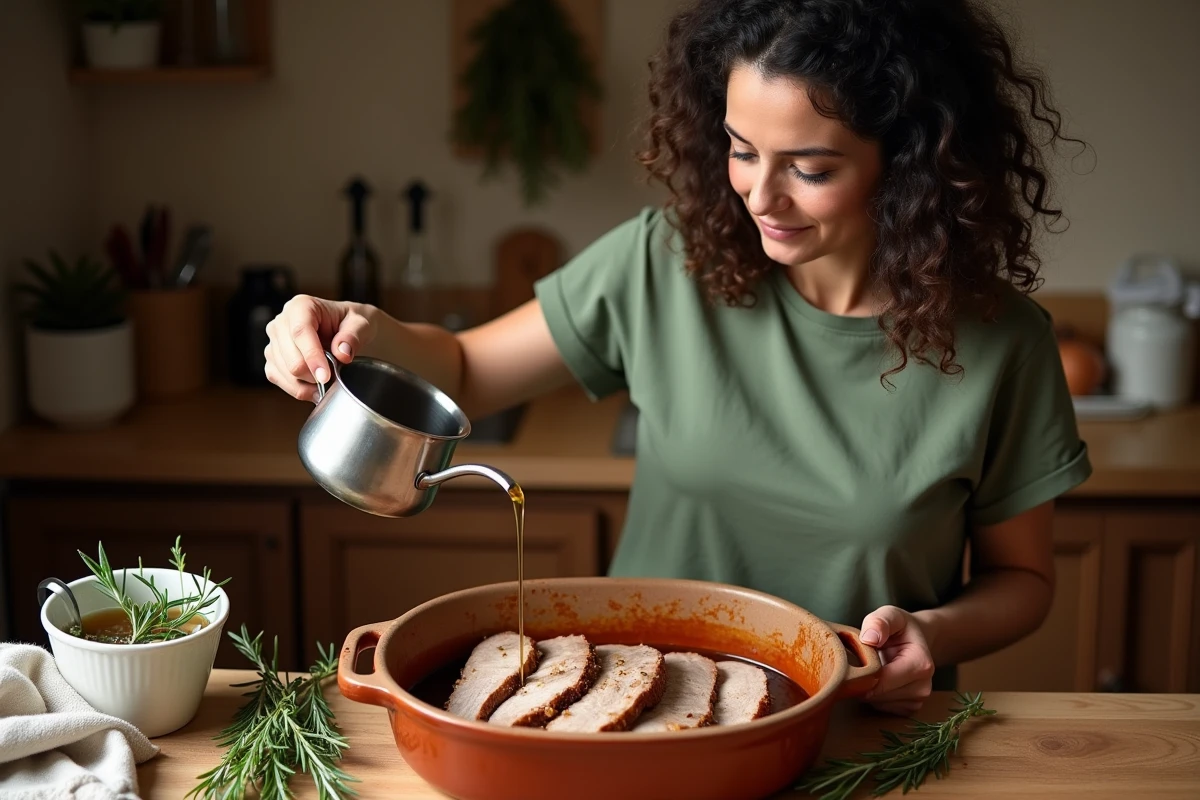
Reheating a whole roast and reheating already sliced pieces require different approaches. The slices have more exposed surface area, so they dry out faster. Lay them flat in the dish, generously drizzle with juices, and further reduce the oven time. Thin slices reheated in hot juice for a few minutes retain their tenderness better than a thick block left too long.
Stovetop Reheating: Grilled Meat and Thin Cuts
For a steak or a cutlet, the low-temperature oven can sometimes be overkill. The stovetop offers a quick alternative if two rules are followed: moderate heat and fat.
Heat the pan over medium heat (not high). Add a drizzle of oil or a knob of butter. Place the meat in and turn it frequently, about every thirty seconds, to distribute the heat evenly. Turning often prevents a dry crust from forming on one side while the other remains cold.
For pieces that tend to toughen (like reheated chicken breast, for example), you can deglaze the pan with a spoonful of broth or water at the end of reheating. The steam released penetrates the fibers and restores moisture to the surface.
Microwave and Reheated Meat: Minimizing Damage
The microwave heats by agitating water molecules, which causes rapid evaporation. On meat, the result is often disappointing. But we can mitigate the issue.
The key is to lower the power to 50% and proceed in short intervals. Heat for thirty seconds, check, and restart if necessary. Between each interval, turn the piece to even out the temperature rise.
Placing a bowl of water in the microwave next to the plate is a widely circulated tip. It has a real effect: the bowl absorbs some of the energy (the power is distributed between the meat and the water), which slows down reheating and reduces drying. Feedback varies on this point depending on the microwave model, but the principle remains consistent.
Covering the plate with a lid or microwave-safe film also retains steam around the meat. It’s a simple gesture that makes a real difference for a portion of chicken or sliced beef.
Food Safety and Reheating Meat: The One-Time Rule
A point rarely addressed in reheating guides: cooked meat should only be reheated once. The Food Standards Agency (UK) reminds us that repeated alternation between hot and cold promotes bacterial growth, even when the initial cooking was correct.
In practice, this means it’s best to portion leftovers before storing them in the refrigerator. Only take out the amount you will consume, and leave the rest cold. This reflex avoids both waste and health risks.
Regardless of the method chosen (oven, stovetop, microwave), reheated meat must reach a sufficient internal temperature before being served. For poultry, this is a non-negotiable point. For beef, a lower temperature is acceptable if the piece has been stored properly and consumed quickly after the first serving.
The real lever for keeping meat tender during reheating is slowness. All methods that work share this common point: they allow the fibers to gradually increase in temperature without losing their moisture. A gentle oven covered, a stovetop at medium heat, a microwave set to half power. The rest is juice, a cover, and a thermometer to avoid exceeding the target.