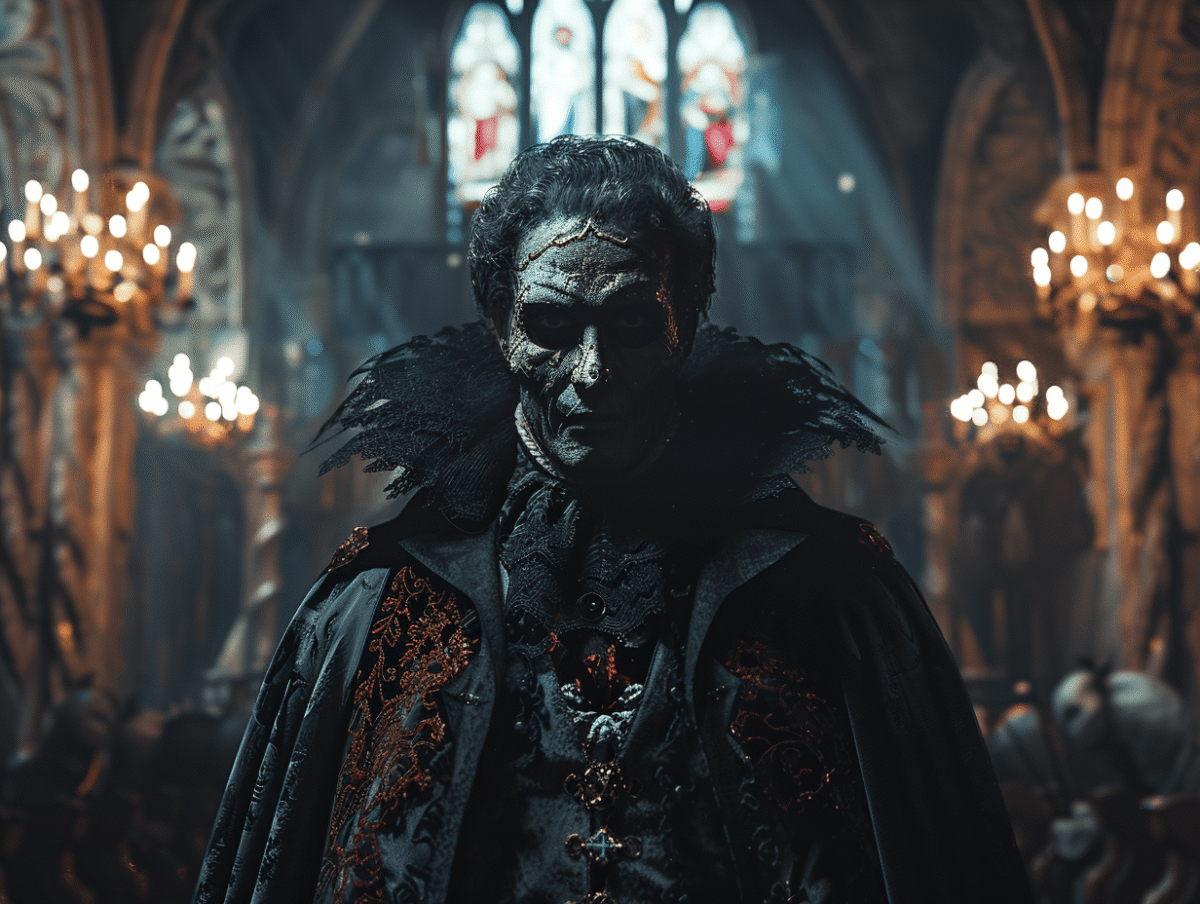
Vampirism, intertwined in the fabric of our myths and legends, continues to fascinate and frighten. It raises a multitude of questions about the origins of these nocturnal creatures, their place in popular culture, and the historical reality behind the fantastic tales. Beyond the figures of Dracula and gothic narratives, some communities claim to practice vampirism as a form of spiritual or cultural expression. This quest for understanding leads us to mysterious initiation practices, where rites and rituals aim to establish a connection between followers and the very essence of vampirism.
From Legend to Reality: Demystifying Vampirism
Often depicted as a creature of the night sucking the blood of the living, the vampire has traversed the centuries, evolving from superstitions into fictional characters. The iconic figure of Dracula, immortalized by Bram Stoker, remains embedded in the collective imagination. However, while the myth of the vampire became popular in Europe in the early 18th century, it finds its roots in much older mythological traditions, varying from culture to culture, from the vrykolakas of Greece to the pontianak of Malaysia.
The question of how to become a vampire evokes curiosity and fascination. Yet, behind the tales of transformation and immortality lie more down-to-earth explanations. Historical cases like Peter Plogojowitz and Arnold Paole, for example, are often cited as incidents that fueled belief in vampires, within regions shaken by socio-political turmoil, such as those affecting the Austrian Empire and the Ottoman Empire. The fear of the undead, of the return from the beyond, intertwines with unknown diseases and misinterpreted funeral practices.
Scholars like Augustin Calmet and Michael Ranft have examined these beliefs, offering critical analyses of these phenomena. The work of John Polidori, ‘The Vampire’, inspired by Lord Byron, as well as that of Bram Stoker, have contributed to shaping the modern myth of the vampire. From folkloric entity to literary figure, the vampire transforms into a powerful symbol, oscillating between horror and seduction, death and eternity, real and imaginary.
Modern Rites and Practices: Between Fascination and Subculture
Contemporary vampiric subculture, far from the lands of Transylvania and the dusty pages of ancient grimoires, is rooted in metropolises like Paris, New York, and London. Individuals, united by a common fascination with vampirism, adopt modern rites that draw from both artistic performance and a search for alternative identity. These communities, often unknown to the general public, cultivate an aesthetic and practices inspired as much by literature as by cinema or art.
The work ‘The Vampire’ by Philip Burne-Jones, an emblematic painting of this fascination, sometimes serves as an aesthetic reference within these circles. Vampirism, in its modern cultural dimension, thus transcends mere news items or horror fables to invest the realms of artistic expression. Cult films and books about vampires, such as the works of Stephenie Meyer or the classics of F. W. Murnau, contribute to perpetuating and renewing interest in these nocturnal creatures.
France, with its rich literary and artistic heritage, is not lagging behind in celebrating the vampire myth. Dedicated events, sometimes held in historical venues, testify to this perpetual reinvention of vampirism. Contemporary vampirism enthusiasts gather there to share their passion, discuss the latest literary or cinematic releases, and, for some, participate in rituals that flirt with the boundaries of reality and fiction.
As a collaborative reference encyclopedia, Wikipedia provides a showcase for this subculture by documenting these phenomena. Quality articles are dedicated to it, offering a detailed analysis of the evolution of vampires in art, from early folkloric tales to the most recent incarnations in books, films, and games. Vampirism, far from being relegated to the status of an outdated superstition, continues to unfold and adapt to the changes in our modern culture.